Company News
Jflabel-Professional Custom Thermal Paper Rolls Manufacturer Over Years.
Language
Jflabel-Professional Custom Thermal Paper Rolls Manufacturer Over Years.
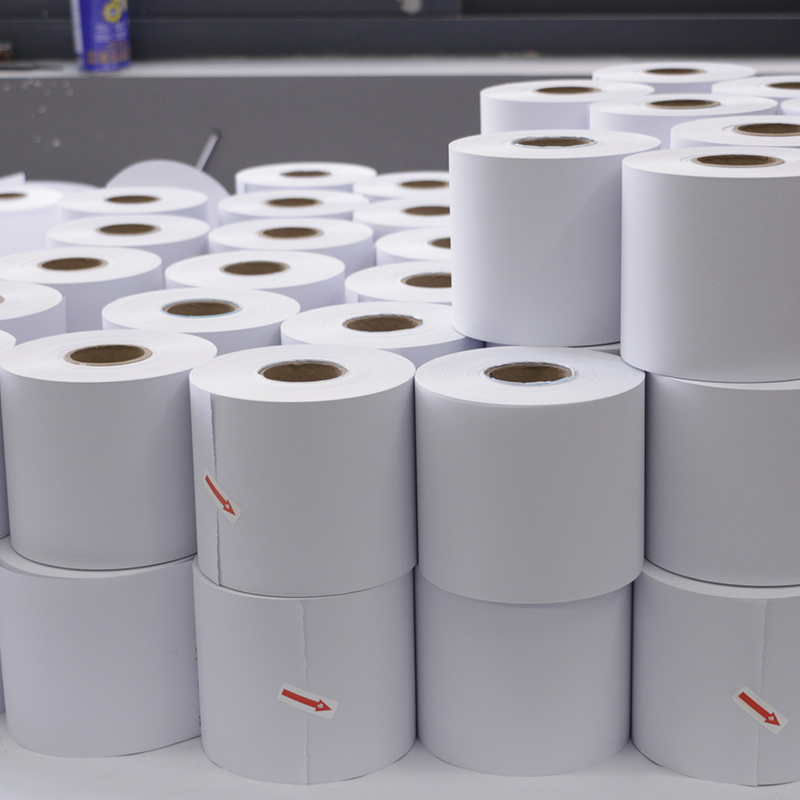
Thermal Cash Register Paper Translation
Thermal cash register paper is a special type of printing paper dedicated to thermal printers. Its quality directly affects printing quality, storage life, and even the service life of printers. Thermal cash register paper generally consists of three layers: the bottom layer is the paper base, the middle layer is the thermal coating, and the top layer is the protective layer. The key factors influencing its quality are the thermal coating and the protective layer.
If the thermal coating of the paper is uneven, it will lead to inconsistent color shades during printing. If the chemical formula of the thermal coating is unreasonable, the storage life of the printed paper will be shortened. The protective layer is also crucial for extending the storage life after printing. It can absorb part of the light that triggers chemical reactions in the thermal coating, thereby slowing down the deterioration of the thermal cash register paper.
Methods for Identifying Thermal Cash Register Paper
Visual Inspection of the Paper Surface
High-quality thermal cash register paper features uniform color development, good smoothness, high whiteness with a slight greenish tint. If the paper appears overly white, it indicates that the formula of its protective coating and thermal coating is improper, with an excessive amount of fluorescent powder added. If the paper has low smoothness or an uneven surface, its coating is uneven. A strong reflective surface of the paper also means an excessive addition of fluorescent powder.
Heat Test
Heat the back of the paper with fire. If the resulting color on the paper is brown, it signifies an unreasonable thermal formula, and the storage life may be relatively short. If the blackened areas show fine streaks or uneven color blocks, the coating is uneven. High-quality paper should turn blackish green after heating, with uniform color blocks that gradually fade from the center to the edges.
As one of the experienced thermal paper rolls suppliers, Jflabel have a professional design team with 20 years of production experience. From publishing, printing and cutting to finished packaging, we provide customers with a full range of services!